A family of shapes
The outline, dimensions and positions are inputs to the design. A change updates the connected parts, while unsupported configurations remain explicit.
 ColivingLiguria
ColivingLiguria / Skill Manufacturing
A parametric method for furniture and manufactured objects. Shape, materials, equipment and services develop together, from the first requirement to a reviewable prototype.
Explore the concrete desk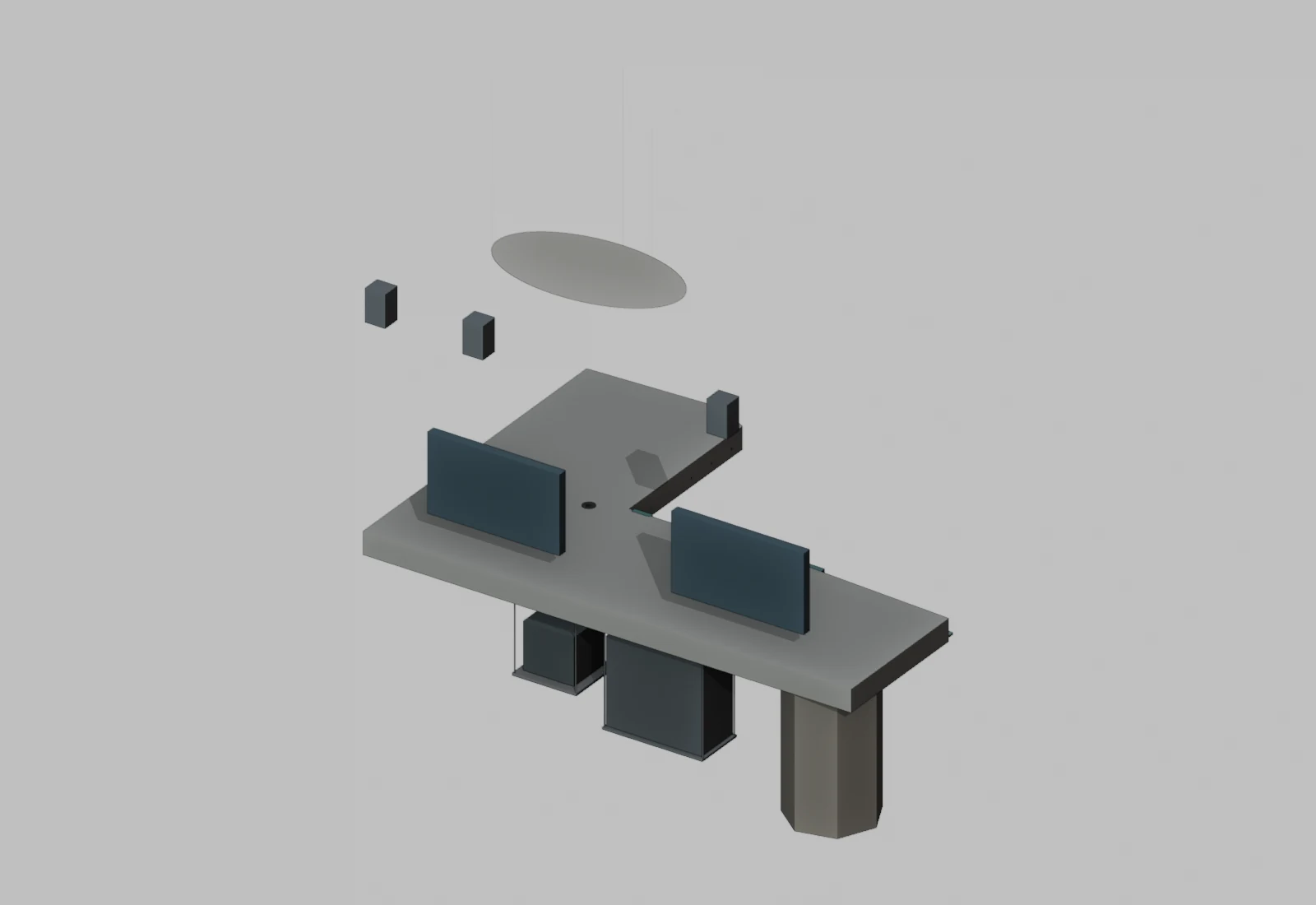
01 / The method
A useful object connects what people do with how it is made, connected and maintained. Specialist AI agents help organise that work; engineering decisions and approval remain with the responsible people.
The outline, dimensions and positions are inputs to the design. A change updates the connected parts, while unsupported configurations remain explicit.
Materials, supports, fasteners, production and removal space belong to the same model. The visible surface is only one part of the object.
Electronics, lighting, charging, data, water and heat are coordinated when the product needs them, with maintenance and replacement considered from the start.
02 / The first project
The concrete desk brings together speakers, a computer, monitors, heating, drinking water, lighting and charging. Two illustrative configurations show how one method can respond to different outlines.
See the desk and its systems03 / Connected expertise
Electronic engineering coordinates the method with mechanical, civil and interior-design contributions. The numbered areas connect specialist work across the object’s lifecycle.
Needs, source material, priorities and open questions.
Outlines, reference frames and linked dimensions.
Material behaviour, production and finishing.
Supports, loads, fixings and removal space.
Separate circuits, accessible connections and isolation.
Power, data, lighting, charging and control.
Assembly order, service access and replacement.
Appearance, touch, proportions and everyday use.
Compare configurations and prepare the next design decision.